
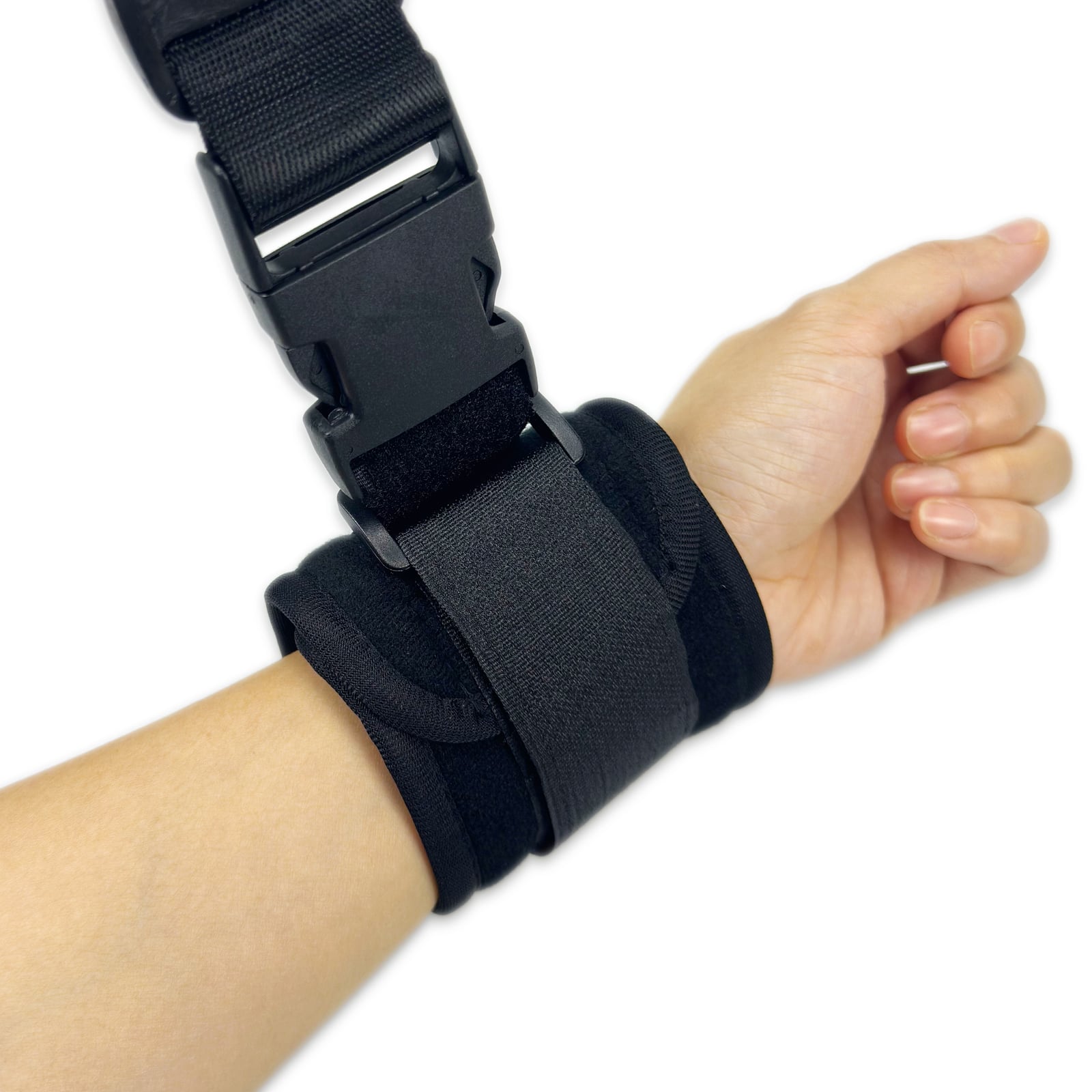
Padded wrist and ankle restraint straps
PSNOOK Quick-Release Wrist and Ankle Straps
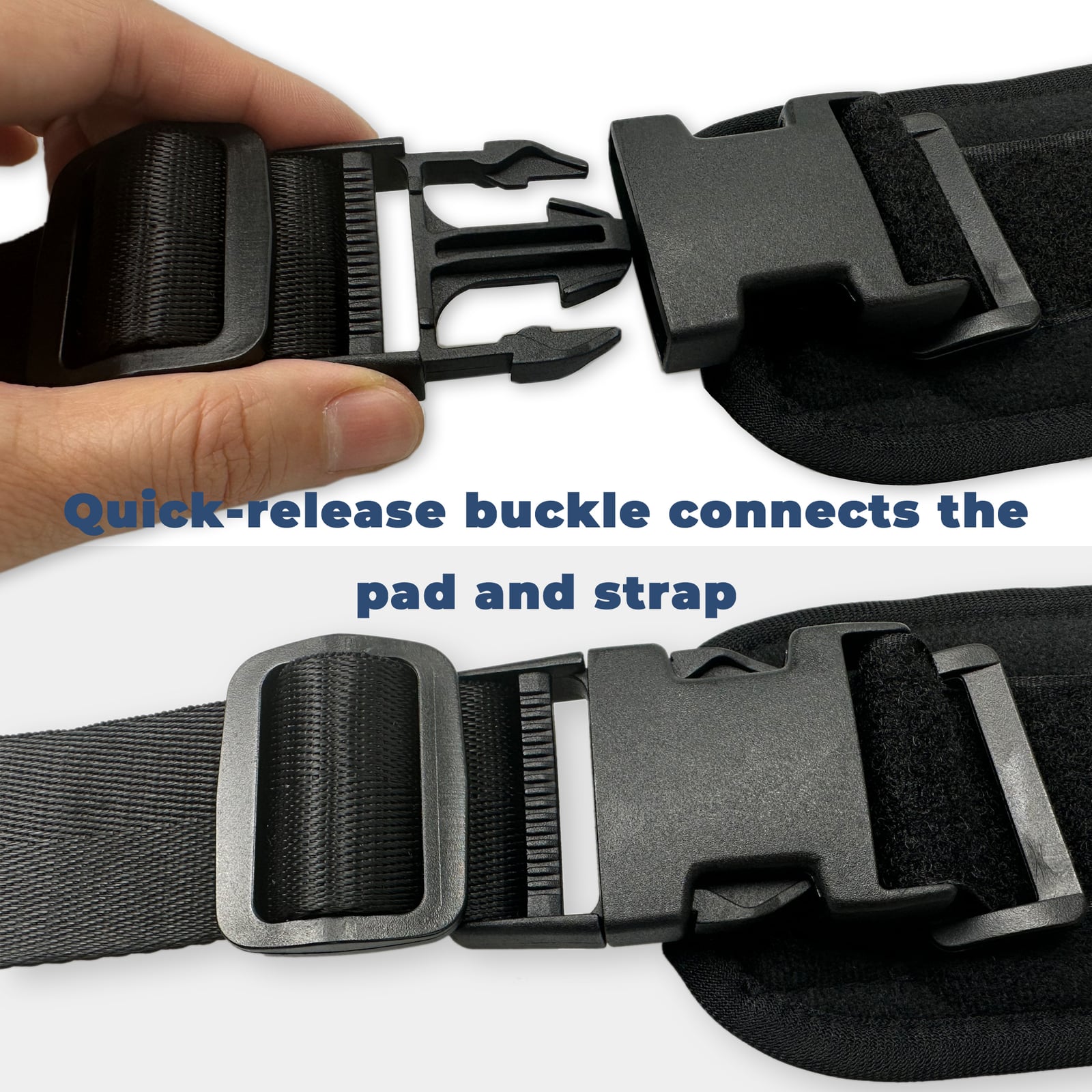
Two padded wrist or ankle restraints with quick-release buckles. Each buckle disconnects the cuff from the long strap; the cuff opens separately. For professionally approved, supervised use.
Adjust the padded cuff around the wrist or ankle separately from the length of the attachment strap.
- Official PSNOOK® product guide
- Amazon checkout, shipping, and return details
- Product support at support@psnook.com
Product snapshot
PSNOOK Quick-Release Wrist and Ankle Straps
- Brand
- PSNOOK
- Category
- Padded wrist and ankle restraint straps
- Package: 2 pieces.
- Material: nylon; color: black.
- Separate cuff-fit and attachment-distance adjustments.
- Quick-release buckle connection.
Product Features
Padded cuffs
Cushioned cuffs form the contact surface.
Quick-release connection
A buckle connects the cuff and attachment strap.
The cuff-to-strap connection can be opened at the buckle.
Separate adjustments
Cuff fit and attachment distance adjust separately.
The long strap sets the distance to the equipment; the cuff closure sets the fit around the limb.
Nylon construction
Black nylon straps form the attachment layout.
Product Specifications
- Package: 2 pieces.
- Material: nylon; color: black.
- Separate cuff-fit and attachment-distance adjustments.
- Quick-release buckle connection.
Who It May Help
Repeated self-injury: Repeated scratching or hitting can cause injury. Describe these actions to the care team so they can assess how to protect the person and whether restraint is needed.
Hitting or kicking other people: Hitting or kicking, including during an agitated manic episode, calls for professional help. The care team must assess the immediate risk and choose the response.
Dementia, intellectual disability, or autism: Some adults need extra communication and support when distressed. If they repeatedly hurt themselves or others, describe those actions to the care team; the diagnosis alone does not establish a need for restraint.
Confusion and pulling at medical tubes: A person with delirium or other confusion may repeatedly pull at a tube without understanding its purpose. The clinical team can check what is causing the distress and how to protect the tube.
Scratching wounds or removing dressings: Repeated scratching or pulling off dressings can damage a wound. Explain what is happening so the care team can choose suitable protection.
Care that includes release and refitting: When wrist or ankle restraint has been prescribed, the caregiver needs to reach the closures for checks and planned release. The cuff and attachment must fit the limb and approved equipment.
Before You Choose
- Choose the two-piece set with cuff-to-strap quick-release buckles.
- Adjust cuff fit and attachment distance as separate settings.
- Plan access to both the buckle and the cuff hook-and-loop closure.
A qualified healthcare professional must decide whether restraint is needed and whether this model is suitable. If approved, use it only with the specified supervision, checks, and release instructions. Never use it for punishment, convenience, or unattended restraint. Do not choose these straps for forceful struggling or acute violence management.
Product Photos
Related Care Guides
Read about related care questions and product differences.
Complete Product Guides
Find measurements, fitting steps, cleaning instructions, and answers to common questions.
Installation & Use Guide
How to fit, adjust, check, and remove the product.
GuideBuying Guide
What to check before choosing this product.
AnswersFAQ
Answers to common product questions.
FitCompatibility
Who it fits and what clothing or equipment it works with.
BuildMaterials
Materials, fastening, and construction details.
SizeSizing
Measurements and how to check the fit.
CareCare
How to clean the product and check it for wear.
Ready to choose the PSNOOK Quick-Release Wrist and Ankle Straps?
Check current price, shipping, availability, and order options when you are ready to purchase.